Hidden in Plain Sight: How Uncharted Data Repositories Become Your Biggest Compliance Liability
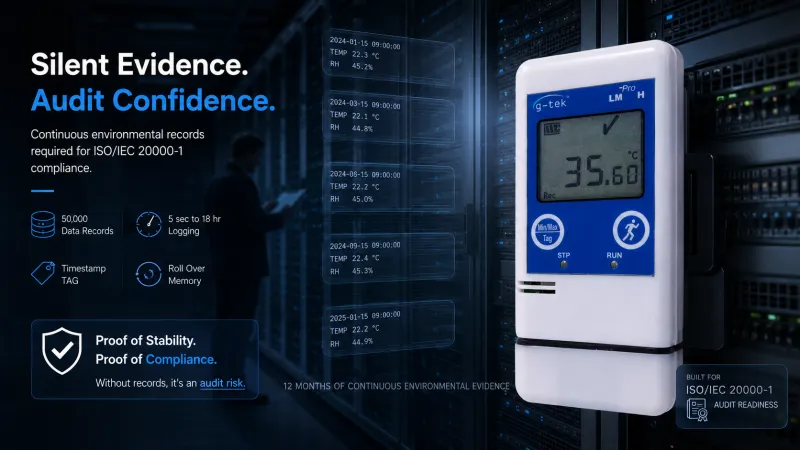
Photo: enterprise data audit server room compliance technology, via www.gtek-india.com
Every enterprise believes it knows where its data lives. The reality, as most chief data officers discover during their first serious audit, is considerably more humbling. Spreadsheets emailed between departments and saved to personal drives. Legacy CRM exports archived on a regional server no one has touched since a 2019 migration. A cloud storage bucket provisioned by a contractor who left the company two years ago. These are not hypothetical scenarios—they are the everyday anatomy of what practitioners call shadow datasets, and they represent one of the most underestimated liabilities in modern enterprise data management.
Under frameworks such as CCPA, HIPAA, and the evolving patchwork of state-level privacy legislation now active across the United States, organizations are legally accountable for personal data they possess—whether or not they know they possess it. Ignorance is not a defensible position before a regulator, and it is certainly not a shield against a breach notification requirement.
What Shadow Datasets Actually Look Like
The term "shadow dataset" does not refer exclusively to rogue IT behavior. In practice, these repositories emerge from entirely ordinary business activity. A marketing team pulls a customer segment from the data warehouse, enriches it with third-party intent data, and stores the combined file locally for a campaign. A finance analyst exports a subset of transaction records to build a quarterly model. A regional operations team maintains its own customer service database because the enterprise CRM was too slow during a critical integration period.
Each of these actions makes sense in isolation. Collectively, they create a data footprint that bears little resemblance to what the official data map shows. When multiplied across hundreds of employees and dozens of departments over several years, the cumulative effect is a compliance exposure that can take months to fully quantify.
Common categories of shadow datasets include:
- Departmental databases: Purpose-built by individual teams using tools like Microsoft Access, Airtable, or local SQL instances, often containing personal data never reviewed by legal or IT.
- Legacy system remnants: Data left behind after platform migrations, frequently in formats that resist modern discovery tooling.
- Unsanctioned cloud storage: Personal Dropbox accounts, unapproved Google Drive folders, or AWS S3 buckets created outside of IT oversight.
- Endpoint copies: Spreadsheets, CSVs, and database exports residing on employee laptops, often synchronized to personal cloud backup services.
- Vendor-held data: Third-party processors or former service providers still holding copies of enterprise data under expired contracts.
The Compliance and Security Calculus
The liability created by these repositories operates on two parallel tracks. The first is regulatory. Under the California Consumer Privacy Act and its successor, the CPRA, organizations must be able to respond to consumer data subject requests—including deletion requests—within 45 days. If a consumer's data exists in a shadow dataset that the organization does not know about, that deletion obligation cannot be fulfilled. The same logic applies under HIPAA's minimum necessary standard and breach notification rules: you cannot protect what you cannot locate.
The second track is security. Every unmanaged dataset represents an attack surface. Shadow repositories are rarely subject to the same access controls, encryption standards, or monitoring protocols as sanctioned systems. They are, in effect, unguarded entry points. The IBM Cost of a Data Breach Report has consistently found that organizations with higher data complexity take significantly longer to identify and contain breaches—a delay that compounds both remediation costs and reputational damage.
Conducting a Comprehensive Data Inventory: A Practical Framework
The goal of a data inventory is not to produce a perfect map on the first attempt. It is to establish a repeatable process that progressively reduces blind spots. The following framework is designed for enterprises beginning this work or seeking to formalize an ad hoc approach.
Phase 1: Scope Definition Begin by defining the audit boundary. Does the initial effort cover all business units or a single high-risk division? All data types or only personal data as defined under applicable law? Setting a realistic initial scope prevents paralysis and produces faster, actionable results.
Phase 2: Automated Discovery Deploy data discovery tooling—solutions such as Varonis, BigID, or Microsoft Purview—across network-connected endpoints, cloud environments, and on-premises servers. Automated scanning identifies data by type, location, age, and access pattern. This step surfaces the most obvious shadow repositories and establishes a baseline.
Phase 3: Structured Stakeholder Interviews Technology alone is insufficient. Schedule structured interviews with department heads, team leads, and administrative staff using a standardized questionnaire. Ask explicitly: Does your team maintain any data outside of approved systems? Have you received data from external vendors that was stored locally? This human layer consistently surfaces repositories that automated tools miss.
Phase 4: Vendor Contract Review Audit all active and recently expired vendor agreements for data processing addenda. Identify vendors who may hold copies of enterprise data and confirm whether contractual deletion obligations have been fulfilled.
Phase 5: Classification and Risk Scoring Once discovered, each dataset should be classified by data type, sensitivity level, regulatory applicability, and business necessity. Assign a risk score that accounts for both the sensitivity of the data and the adequacy of current controls. This scoring drives prioritization for remediation.
Phase 6: Consolidation or Controlled Decommissioning For each shadow dataset, the governance decision is binary: migrate it into a sanctioned, governed system or decommission it. Where operational necessity exists, establish formal data stewardship. Where it does not, delete with documented confirmation.
Audit Checklist: Minimum Viable Inventory Controls
- All cloud storage accounts inventoried and tied to corporate identity management
- Endpoint discovery scan completed across all managed devices
- Department self-attestation forms submitted and reviewed
- Legacy system data reviewed for ongoing business necessity
- Third-party data processor list reconciled against current contracts
- Data retention schedules applied to all identified repositories
- Access controls reviewed and least-privilege principle enforced
- Incident response plan updated to reflect newly mapped data locations
Maintaining Operational Continuity During Consolidation
One of the most common objections to data consolidation is the fear of disrupting business operations. This concern is legitimate but manageable. The key is sequencing: begin decommissioning with datasets that have no active business use and escalate to operationally sensitive repositories only after establishing clear migration pathways.
Establish a formal exception process for cases where a shadow dataset cannot be immediately consolidated. Exceptions should require documented business justification, a defined remediation timeline, and interim security controls. This approach maintains momentum without creating operational risk.
The Governance Dividend
Enterprises that complete a thorough data inventory consistently report benefits beyond compliance. A reduced data footprint lowers storage costs, simplifies data subject request fulfillment, and accelerates the response to regulatory inquiries. More fundamentally, it creates the conditions for trustworthy data analytics: when teams know that the enterprise data map is accurate, they can build models and make decisions with greater confidence.
Fair data management begins with knowing what data you actually hold. The audit you have been avoiding is not a bureaucratic exercise—it is the precondition for every governance initiative that follows.